
About World Mental Health Day
Every year on 10 October, World Mental Health Day marks WHO’s annual campaign to raise awareness of mental health issues and mobilise efforts to improve mental health care worldwide.
This year’s theme, “Lived experiences heard: real voices, real change”, highlights the importance of meaningfully involving people with lived experience of mental health conditions in the policies, services, and decisions that affect their lives. WHO stresses that lived experience provides valuable expertise and insight that cannot be gained through professional training or research alone.
Meaningful engagement means going beyond simply asking people to share their experiences. It means creating opportunities for people with lived experience to influence decisions, co-design services, strengthen peer-led approaches, challenge stigma, and strengthen accountability. Such involvement can make mental health care more person-centred, rights-based, and responsive to people’s actual needs.
However, meaningful participation is still far from standard practice. According to the WHO Mental Health Atlas 2024 survey, only 45% of responding countries reported ongoing collaboration with people with lived experience and family or caregiver advocacy groups in the planning, delivery, or monitoring of mental health services.
This World Mental Health Day, WHO calls for a shift from listening to action: mental health systems should be developed with people with lived experience, not simply for them.
EFIC Initiatives on Pain and Mental Health
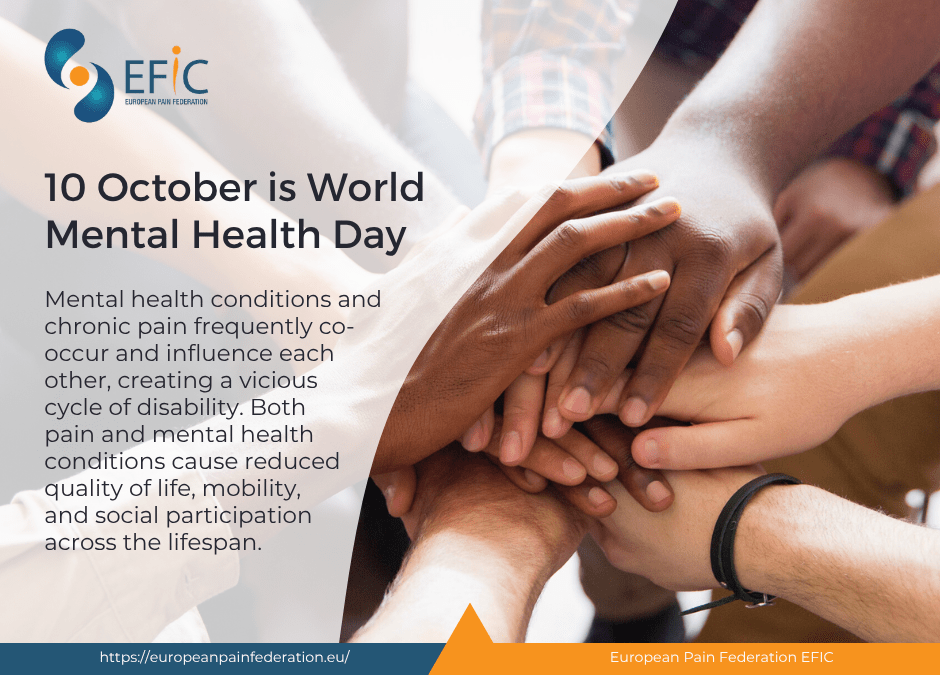
World Mental Health Day is also an opportunity to highlight the close relationship between pain and mental health.
Pain and mental health conditions can reinforce one another, affecting quality of life, mobility, and social participation. When they occur together but are addressed separately, outcomes can be poorer: chronic pain may negatively affect mental health treatment, while unrecognised mental health conditions can make effective pain management more difficult.
Recognising these connections is central to EFIC’s multidisciplinary approach to pain care and education. The EFIC Academy provides year-round evidence-based pain education for healthcare professionals from different disciplines, including physicians, psychologists, physiotherapists, and nurses. EFIC’s pain curricula also recognise the psychological dimensions of pain, including through the Core Curriculum for the European Diploma in Pain Psychology, which covers psychological assessment, evidence-based interventions, and the biopsychosocial model of pain.
EFIC is also engaged in the HaPpY Research Network (Comorbidity of Chronic Pain and Mood Disorders), funded by the European Union’s research programmes, which explores the shared mechanisms and interventions that can break the vicious cycle of pain and emotional distress.
SIP’s Commitment to Better Mental Health Policies
The 2026 World Mental Health Day theme is also closely aligned with the work of the Societal Impact of Pain (SIP) Platform. SIP’s Joint Statement on Pain and Mental Health, developed together with professional and patient organisations, calls on EU and national policymakers to recognise and address the strong relationship between pain and mental health.
Importantly, one of its recommendations specifically calls for people with lived experience of mental health conditions and conditions involving pain to be involved in developing integrated services. This reflects the principle at the heart of World Mental Health Day 2026: people affected by health conditions should not only be consulted, but should have a meaningful role in shaping the services and policies intended to support them.
SIP calls on policymakers to:
- assess the impact of pain in people living with mental health conditions;
- better integrate pain and mental health services rather than treating them separately;
- allocate adequate funding for research into the relationship between pain and mental health;
- provide early access to pain management for people at risk of developing chronic pain and mental comorbidity;
- train healthcare professionals to understand the bidirectional relationship between pain and mental health;
- involve people with lived experience in developing integrated services;
- support good working conditions and the reintegration and adaptation of people living with pain and/or mental health conditions into the workforce;
- address the biological, psychological, and social dimensions of pain within mental health policies; and
- reduce stigma surrounding both pain and mental health.