
Join Our Upcoming Webinars
Our webinars feature Q&As, presentations and much more information on important and current matters of pain research and science as well as main activities and projects of the European Pain Federation EFIC. Please note: Some may for EFIC Academy members only and require access to the EFIC Academy Education Platform.
Recent discoveries of pro-algetic microbiome and IgG autoantibodies in patients with severe Fibromyalgia syndrome have raised hope for novel treatment approaches. Amir Minerbi and Andreas Goebel will summarise the evidence arising from their research suggesting that FMS is a microbiome and immune mediated condition; they will then present the outcomes from recent clinical trials that have successful translated these findings into therapeutic benefit. However, more work is needed: the presenters will discuss implications of these laboratory and clinical data for future research, and the development of accessible, efficacious clinical treatment options for patients with severe FMS.
Chronic pain is common among refugees and asylum seekers, yet pain services rarely adapt to their needs, and pain research rarely captures the social factors that shape their experiences. Join us on 7 October 2026, 12.00-13.00 CEST, for a session presenting a qualitative study of a trauma-informed, community-based pain programme co-developed with refugees, alongside a commentary introducing ISSHOOs, an international initiative developing a standardised approach to reporting social determinants of health in pain research. Of interest to clinicians, researchers, and allied health professionals working in trauma-informed, culturally responsive, and equity-focused pain care.
This webinar marks European Day on Pain Awareness 2026, whose theme is the economic considerations of pain. It examines a dimension of that burden that is often overlooked: the role of chronic pain in cancer survivorship and in returning to work after cancer. Participants will gain insight into how pain affects people living with and beyond cancer as they re-enter the workforce, what supports a sustainable return to work, and how this connects to the latest findings on the economic considerations of pain set out in the Societal Impact of Pain (SIP) position paper. Contributions from COTEC and ECO will situate these findings within occupational practice and cancer care across Europe. Together, these insights will underline why coordinated, pain-competent support is essential to improve outcomes for people living with and beyond cancer, sustain their participation in work, and reduce the wider economic and societal cost of pain.
This webinar marks European Day on Pain Awareness 2026, whose theme is the economic considerations of pain. It explores how chronic pain affects people’s ability to remain active, participate in society and sustain healthy working lives, highlighting the importance of prevention, rehabilitation and multidisciplinary care in reducing its hidden personal, societal and economic costs. Participants will gain insight into how early intervention, movement-based rehabilitation and evidence-based pain management can improve health and work outcomes, while also examining the latest findings on the economic considerations of pain presented in the Societal Impact of Pain (SIP) position paper. Contributions from EFIC, EULAR and ER-WCPT will bring together perspectives from pain medicine, rheumatology and physiotherapy to demonstrate how coordinated, multidisciplinary approaches can support people living with pain, promote long-term participation in work and society, and contribute to healthier, more resilient communities across Europe.
The webinar will explore how chronic pain affects individuals, workplaces and European economies. SIP will present key findings from its latest position paper on the economic burden of pain, highlighting the scale of productivity loss, healthcare costs and societal impact across Europe. Complementing this, researchers from the European Journal of Pain will discuss new evidence on chronic pain and labour market participation, examining how pain influences employment and workforce engagement over time.
Women are more likely to experience chronic pain, yet pain research, diagnosis, and treatment have historically underserved them. This webinar connects the science with the policy response: the PAINDIFF Network’s newly published methodological recommendations (Nature Neuroscience) for studying sex and gender as variables in pain research, and the SIP Position Paper on Gender Equity in Pain, developed jointly by EFIC and Pain Alliance Europe, which sets out recommendations for EU and national policymakers. With speakers from research, EFIC/SIP advocacy, and PAE representing the patient voice, the session looks at why the evidence base has been biased, what better research design looks like, and what it means for diagnosis, treatment access, and equity in care. Open to healthcare professionals, patient representatives, and the general public.
Watch Webinars on Demand
Our webinars feature Q&As, presentations and much more information on important and current matters of pain research and science as well as main activities and projects of the European Pain Federation EFIC. Please note: Some may for EFIC Academy members only and require access to the EFIC Academy Education Platform.
The search for objective markers of pain is advancing quickly, raising hopes for better diagnosis and treatment but also difficult questions about what such measures can reliably tell us. Drawing on two recently published articles in Nature Neuroscience, this webinar presents two perspectives on the promise and the limits of pain biomarkers. Attendees will gain a clearer understanding of where the science currently stands, the ethical and clinical questions it raises, and how objective measures and the experience of people living with pain can be brought together in research and practice.
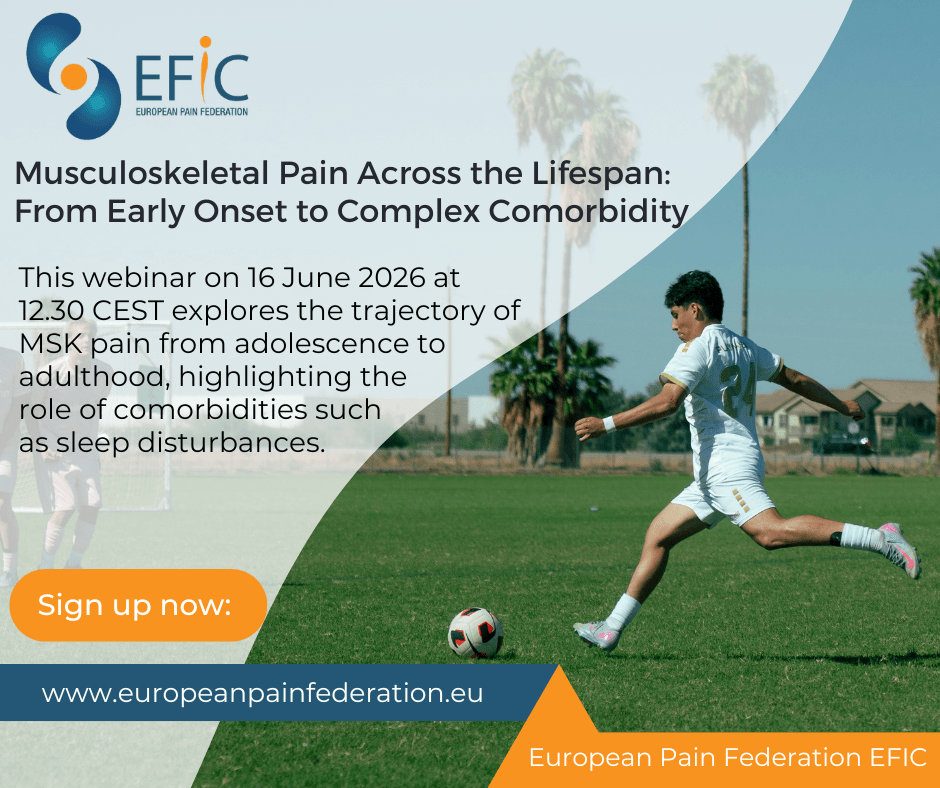
Musculoskeletal pain often begins early in life and can evolve into a complex, persistent condition. This webinar brings together recent European Journal of Pain research to explore the trajectory of MSK pain from adolescence to adulthood, highlighting the role of comorbidities such as sleep disturbances. Experts will discuss early identification, risk factors, and holistic management approaches to improve long-term outcomes in clinical practice.
This joint webinar, organised by the World Health Organization (WHO), the European Pain Federation EFIC, and the Societal Impact of Pain (SIP), explores how ICD-11 can be effectively integrated into digital health systems to ensure that pain is appropriately captured within routine health data. The webinar focuses on the practical integration of ICD-11 into electronic health records and health information systems, and how this can improve data quality, decision-making, and care pathways for people living with pain.
Opioid use in chronic pain remains a complex clinical challenge. This webinar explores the transition from appropriate prescribing to potential misuse, highlighting key biopsychosocial risk factors and patient trajectories. Drawing on recent European Journal of Pain research, experts discuss how to identify high-risk patients, recognise early warning signs, and integrate multidisciplinary strategies to optimise care and minimise harm in everyday clinical practice.
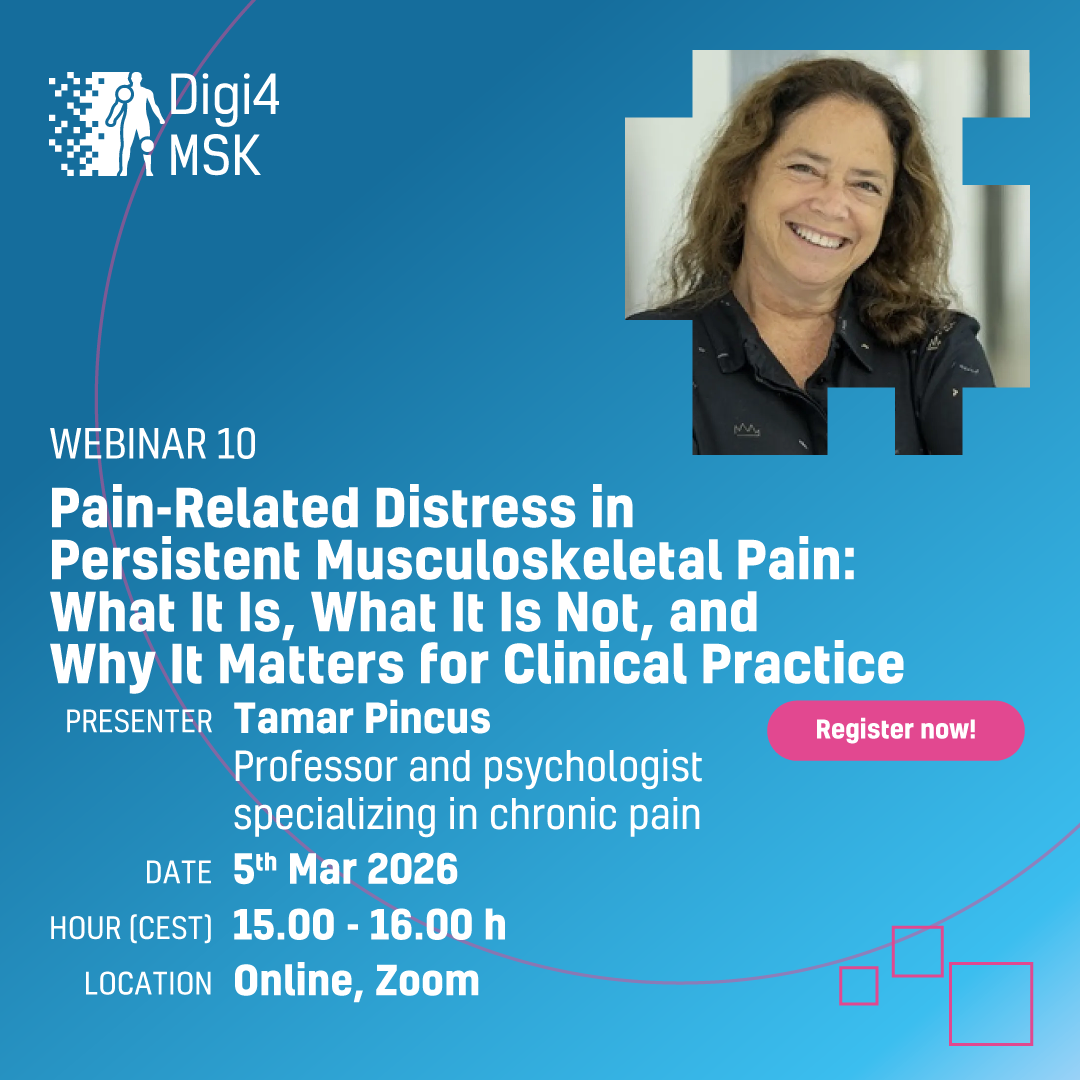
As part of the DIGI4MSK webinar series, this session focused on pain-related distress in people living with persistent musculoskeletal (MSK) pain—what it is, what it is not, and how clinicians can recognise it in everyday practice. We were pleased to welcome Professor Tamar Pincus, psychologist and leading expert in chronic pain. Drawing on research evidence, she explored how pain-related distress differs from other psychological constructs, why it matters for short- and long-term outcomes, and how clinician–patient communication plays a central role.
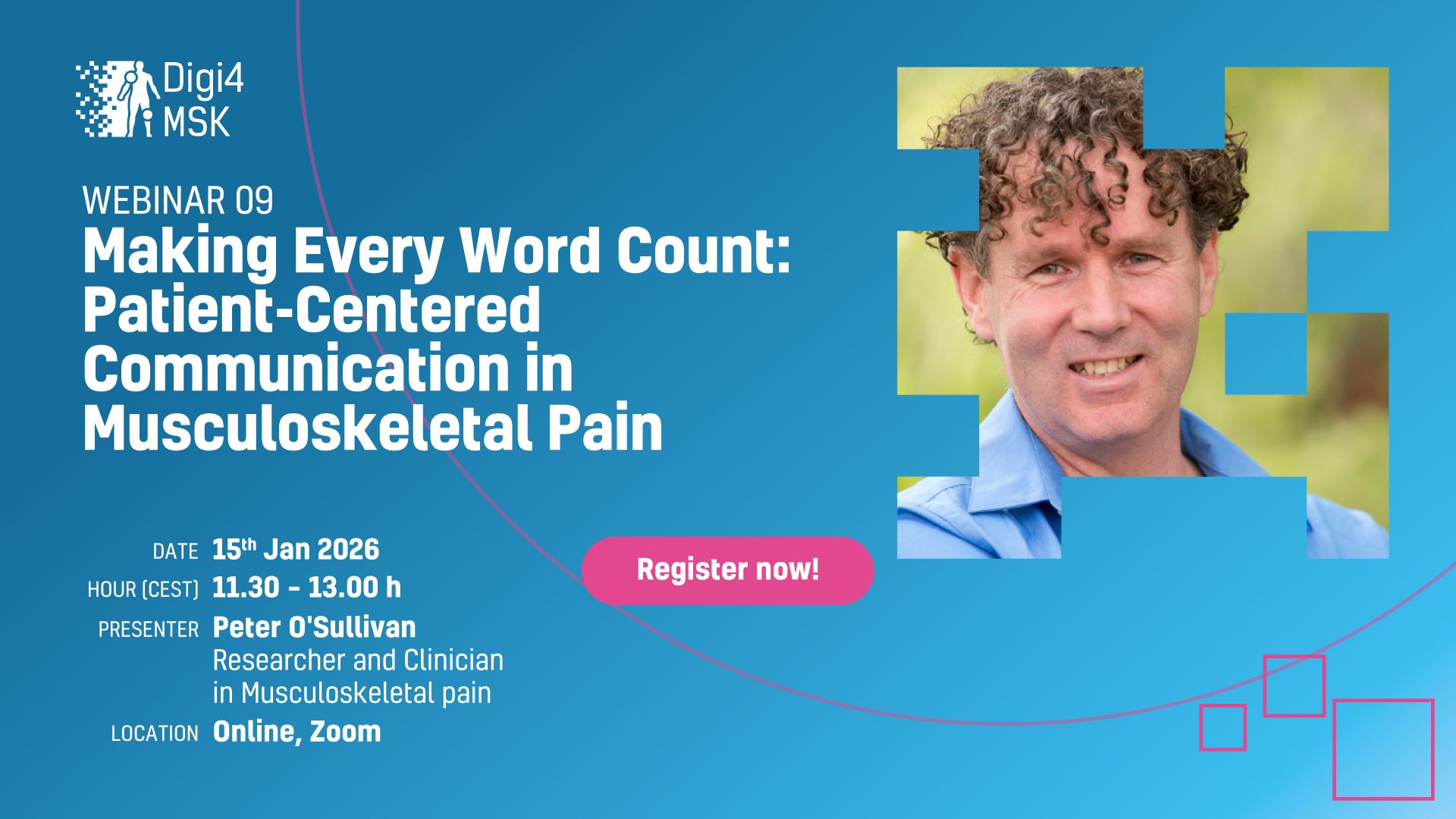
As part of the DIGI4MSK webinar series, this session focused on how healthcare professionals can use patient-centered communication to improve outcomes in musculoskeletal (MSK) pain care. In an era where patients are increasingly influenced by digital health information, effective communication and health literacy are more important than ever. We were pleased to welcome Professor Peter O’Sullivan (Curtin University), researcher and clinician in MSK pain and developer of Cognitive Functional Therapy. He shared evidence-based approaches and practical strategies to help HCPs make every word count in their patient interactions.