EFIC Research Grants and Prizes
Applications for E-G-G 2027 are closedEFIC-Grünenthal Grant (E-G-G)
Funding to launch an independent pain research career. The E-G-G supports early-career healthcare professionals and researchers to lead their own clinical or human experimental pain research, with up to €37,000 per project.
Applications closed on 7 September 2026. Winners will be announced in January 2027.
Why apply
What the E-G-G makes possible
The E-G-G is often a researcher's first independent grant. It is designed to give early-career scientists and clinicians the means, and the standing, to lead their own work.
Independent funding you lead
The project is designed and led by you, not as a subpart of someone else's programme. For many recipients, the E-G-G is the first grant they hold in their own name.
Freedom to test an original idea
The grant rewards novelty. An original question or approach is encouraged even where there is a risk of failure, so you can pursue work that is harder to fund elsewhere.
Visibility when it matters most
Winners are recognised at the EFIC Congress and through EFIC and Grünenthal communications, putting early-career work in front of the European pain community.
A place in the network
The E-G-G connects you to EFIC's research community across 40 national chapters, from basic science through clinical medicine, nursing, physiotherapy, and psychology.
About the grant
Two decades of pain research funding
The EFIC-Grünenthal Grant is one of Europe's established awards for early-career pain research. It is awarded independently by the European Pain Federation EFIC and funded by Grünenthal GmbH, and has supported work across the continent spanning basic science, clinical medicine, nursing, physiotherapy, and psychology.
The 2027 cycle
E-G-G 2027
Who was eligible
Who could apply
- Healthcare professionals or researchers working in pain management or pain research.
- Holding a PhD awarded no more than seven years before 30 September 2026. This window could be extended for documented maternity or paternity leave, long-term illness, or national service that fell after the qualifying degree and before the deadline. The extension was calculated from the supporting documents provided.
- Holding a temporary or permanent position at a hospital, university, or research institution in an EFIC member country.
What the grant funds
- Translational or clinical research that improves our understanding of pain mechanisms in humans, or that improves the diagnosis, treatment, and management of pain in people living with pain, including innovative educational initiatives.
- Projects designed and led independently by the applicant. Co-financing is acceptable, but the proposal should not be a subpart of a larger unrelated programme unless its standalone contribution is clearly defined and justified.
The E-G-G does not fund research on animals, computer simulations, or cell lines. The grant is for human-focused pain research.
How applications are assessed
- Strength of the applicant - training, research experience, publication record, and the fit between the applicant's expertise and the proposed work. Career stage is considered relative to years since the PhD, and both junior and more senior researchers were encouraged to apply.
- Novelty and originality - hypothesis-driven work is preferred over data collection, and original or higher-risk approaches with clear potential to improve quality of life for people living with pain are valued.
- Quality of the proposal - clear objectives, a sound methodology and study design, and a valid analysis plan with a justified sample size.
- Feasibility - work that can realistically be completed within two years on a budget of up to €37,000.
Applications for E-G-G 2027 closed on 7 September 2026.
What happens next
Applications for E-G-G 2027 closed on 7 September 2026. Here is what happens between now and the congress in Glasgow.
Questions about an existing application or the evaluation timeline can be sent to research@efic.org.
The 2027 cycle at a glance
Who assesses applications
Applications are assessed by a sub-group of the EFIC Working Group for Grants and Prizes. The decision on who receives an E-G-G is made independently by EFIC, on scientific merit alone.
EFIC Working Group for Grants and Prizes
- Thomas Graven-Nielsen (Chair)
- Nadine Attal
- Ulf Baumgärtner
- Kirsty Bannister
- Ulrike Bingel
- Ruth Defrin
- Patrice Forget
- Bijar Ghafouri
- Eija Kalso
- Walter Magerl
- Gisèle Pickering
- Markus Ploner
- Esther Pogatzki-Zahn
- Audun Stubhaug
- Andrea Truini
Previous winners
The research the E-G-G makes happen
E-G-G projects are chosen for their potential to change how pain is understood, diagnosed, and treated. The 2027 winners will join two decades of recipients whose work has shaped the field. Here are three of the most recent projects.
Postherpetic neuralgia is a chronic pain condition that can follow shingles. Most research relies on animal-derived skin models that do not reflect the human condition well. This project develops a human-specific, lab-grown skin model containing nerve cells, giving researchers a better tool to understand the condition and to speed the search for new treatments.

Pain is experienced by everyone, but it is not assessed or treated equally. Evidence shows that some groups are less likely to receive adequate pain care. This project examines how racialised stereotypes influence the diagnostic information healthcare providers seek when assessing children, with the aim of reducing inequities in pain care.

Neuropathic pain has a severe effect on people's lives, and current treatments largely address symptoms rather than causes. This project tests RNA-based approaches in human-derived sensory neuron models that carry mutations linked to chronic neuropathic pain, working towards personalised treatments aimed at the underlying mechanisms.
How the E-G-G launches careers
For many recipients, the E-G-G was the first independent grant on their CV, and the foundation for what came next.
"I used the E-G-G to start a line of work on learning and pain. It led to an MRC Career Development Award to lead my own group, and now to a faculty position at the University of Cambridge. Demonstrating the ability to win and manage independent funding was instrumental."
"The E-G-G was my first independently acquired grant, and there is no question that it has been the biggest stepping stone on my path towards academic independence."
"Winning the E-G-G had a real impact on my career. The funding let me run an experiment that became the basis for my own independent line of research, and the visibility it brought put my work into focus."
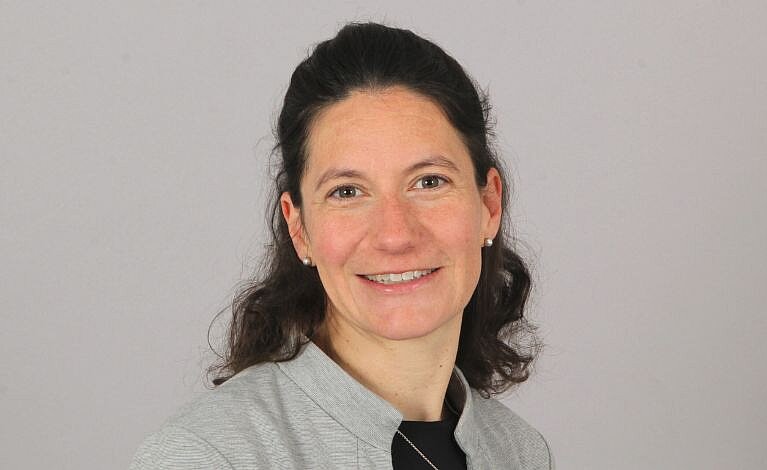
Maddalena Comini, 2025 winner
Resources
Learn more about the grant
Watch these short webinars to learn more about the grant and what makes a strong application, ahead of the next E-G-G cycle.
Thank you for applying
Applications for E-G-G 2027 closed on 7 September 2026. Winners will be announced in January 2027.
See what happens next