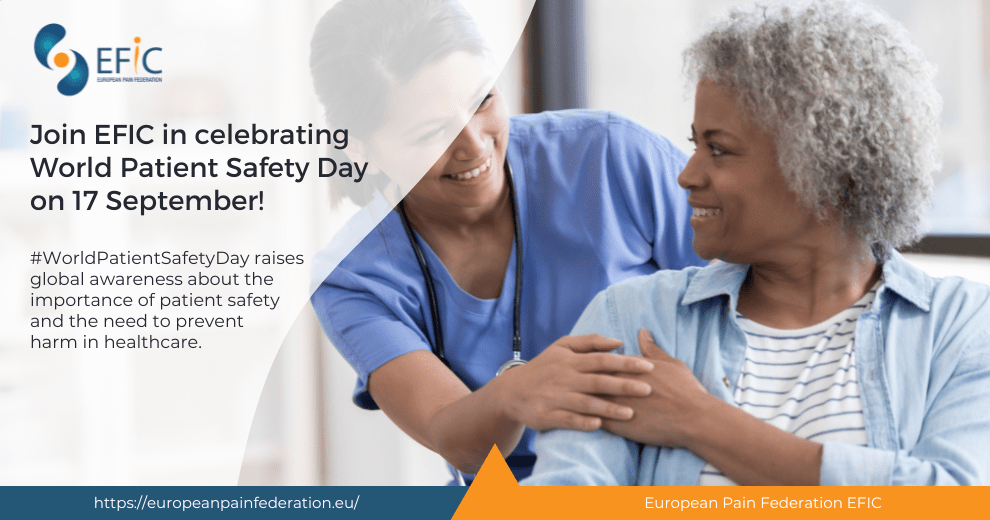
World Patient Safety Day, observed every year on 17 September, is a global campaign led by the World Health Organisation (WHO) to raise awareness, mobilise action, and reduce avoidable harm in healthcare. This year’s theme, “Safe care for noncommunicable diseases”, highlights the importance of safe care for people living with noncommunicable diseases (NCDs) under the slogan “Safe care for life!”.
Why it matters to chronic pain professionals
-
People living with NCDs often require continuous care across multiple settings and over long periods, creating multiple points where safety risks can arise.
-
EFIC calls on policymakers and healthcare systems to integrate safe care strategies as part of broader chronic pain prevention and management initiatives.
WHO 2026 Objectives
- Raise global awareness of patient safety challenges associated with NCDs across the continuum of care through a primary health care approach while considering disease-related factors, health system challenges and determinants of health that may increase the risk of harm.
- Promote the meaningful engagement of people living with NCDs and communities, in identifying safety risks and co-developing solutions with health practitioners, organizational leaders and policy-makers.
- Encourage stakeholders to integrate patient safety principles across NCD-related legislation, policies, strategies and programmes, with an emphasis on strengthening PHC-oriented health systems.
- Support health workers in strengthening patient safety practices such as safer diagnosis, medication safety and meaningful patient engagement.
Advancing ICD‑11: SIP & EFIC lead the way for chronic pain recognition in Europe
The Societal Impact of Pain (SIP) Platform, led by the European Pain Federation (EFIC) in partnership with Pain Alliance Europe (PAE), continues to drive the implementation of ICD‑11. This diagnostic framework is the first to clearly define and classify chronic primary pain and related subtypes as legitimate health conditions, reducing the risk of misdiagnosis, under-treatment, or inappropriate prescribing.
When chronic pain is not correctly recorded, patients may experience delays in care, limited access to appropriate therapies, and even stigmatisation. By supporting the rollout of ICD-11, EFIC and SIP are working to improve diagnostic safety, enhance treatment accuracy, and elevate chronic pain as a public health priority across and beyond Europe.
This World Patient Safety Day, EFIC, PAE, and SIP call on policymakers, clinicians, and health systems to prioritise the safe identification and management of chronic pain, starting with the right diagnosis.
Get involved
-
Visit our page for downloadable resources, infographics, and activities tailored to European pain professionals.
-
Join local initiatives or partner with patient organisations and policymakers to elevate conversations around pain safety.
-
Use #PatientSafety and #PainAwareness and join the global movement on 17 September.