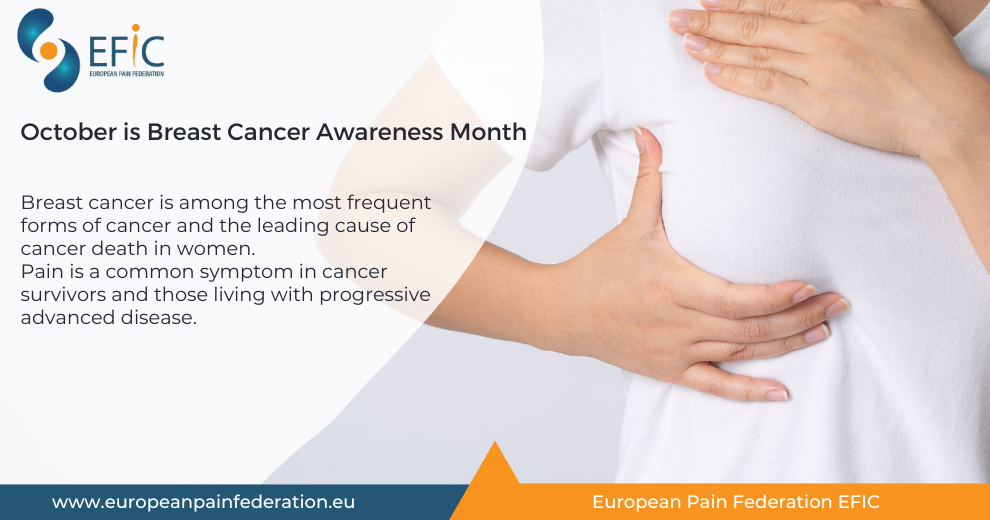

October is recognised globally as Breast Cancer Awareness Month, an opportunity to raise awareness of breast cancer, promote early detection, support those affected, and highlight the importance of continued action throughout the year.
In 2026, Living Beyond Breast Cancer (LBBC) is highlighting the message “Awareness is just the beginning”. The campaign encourages individuals, organisations, and communities to move beyond awareness and take meaningful action, whether by learning about breast health and screening, supporting someone affected by breast cancer, or sharing trusted information and resources.
Global Impact of Breast Cancer
Breast cancer remains the most commonly diagnosed cancer among women worldwide. In 2024, an estimated 2.4 million women were diagnosed with breast cancer and approximately 694,000 died from the disease globally.
In 2021, the World Health Organization (WHO) established the Global Breast Cancer Initiative (GBCI), aiming to reduce global breast cancer mortality by 2.5% annually, potentially saving 2.5 million lives by 2040. Its work centres on three key pillars:
- Health promotion for early detection
- Timely diagnosis
- Comprehensive breast cancer management
These efforts remain increasingly important, as breast cancer cases are projected to rise by 38% and deaths by 68% by 2050.
EFIC’s Role in Cancer Pain Management
Pain is a common symptom among people living with and beyond cancer, affecting up to 40% of cancer survivors and at least 66% of people with advanced progressive disease.
The European Pain Federation EFIC and Societal Impact of Pain (SIP) work to improve the recognition and management of cancer-related pain. Relevant EFIC and SIP initiatives include:
- Standards for the Management of Cancer-Related Pain, a position paper from the EFIC Task Force on Cancer Pain, which presents ten standards developed to improve the quality of cancer pain management and reduce variation in practice across Europe.
- SIP Position Paper on Cancer-Related Pain, which sets out recommendations for European and national policymakers to strengthen the recognition and management of cancer-related pain, including through standards of care, education and training, research, and appropriate resources for cancer care.
- INTERACT-EUROPE, an EU4Health-supported project to develop inter-specialty cancer training, including pain evaluation and management throughout the cancer journey.
From Awareness to Action: Screening and Early Detection
One way of turning awareness into action is by improving access to reliable information and appropriate screening. The European Commission Initiative on Breast Cancer (ECIBC) provides evidence-based guidelines on breast cancer screening and diagnosis as well as a European quality assurance scheme covering breast cancer services.
For asymptomatic women at average risk, the ECIBC strongly recommends organised mammography screening for those aged 50–69 and conditionally recommends screening for women aged 45–49 and 70–74.
Across Europe, initiatives are also working to bring information about early detection directly to communities. In Switzerland, the 2026 PINK CUBE Roadshow is travelling through ten cantons, offering free consultations and breast examinations and providing information on breast cancer screening and mammography.
Further Reading
To mark Breast Cancer Awareness Month 2026, we are highlighting a selection of related articles:
De Groote, A., Dams, L., Van der Gucht, E., Schepers, J., Mertens, M., De Groef, A., and Meeus, M. (2025). “From breast cancer diagnosis to survivorship: Analyzing perioperative biopsychosocial phenotypes and their relationship to pain on long term”. The Journal of Pain, 26. https://doi.org/10.1016/j.jpain.2024.104709
Leysen, L., Adriaenssens, N., Nijs, J., Pas, R., Bilterys, T., Vermeir, S., Lahousse, A. and Beckwée, D. (2019). “Chronic Pain in Breast Cancer Survivors: Nociceptive, Neuropathic, or Central Sensitization Pain?”. Pain Practice, 19: 183-195. https://doi.org/10.1111/papr.12732
Mustonen, L., Nieminen, J. K., Koskela, S., Kaunisto, M., Kalso, E., Tienari, P.J. and Harno, H. (2025). “HLA-Region Genetic Association Analysis of Breast Cancer Patients With and Without Persistent Postsurgical Neuropathic Pain”. European Journal of Pain, 29. https://doi.org/10.1002/ejp.70009
Rosenblom, M. F., Reme, S. E. and Jacobsen, H. B. (2025). “The Role of Negative Affect and Experiential Avoidance in Postsurgical Pain and Fatigue Among Norwegian Women With Breast Cancer”. European Journal of Pain, 29. https://doi.org/10.1002/ejp.4788
Spil, J., de Groot, L. G., Kwee, E., Mureau, M. A. M., Hundepool, C. A., and Zuidam, J. M. (2026). “Neuropathic Pain Prevalence After Axillary Procedures in Breast Cancer: A Systematic Review and Meta-analysis”. Clinical Breast Cancer, 26(9): 31-38. https://doi.org/10.1016/j.clbc.2026.07.023