
Glasgow
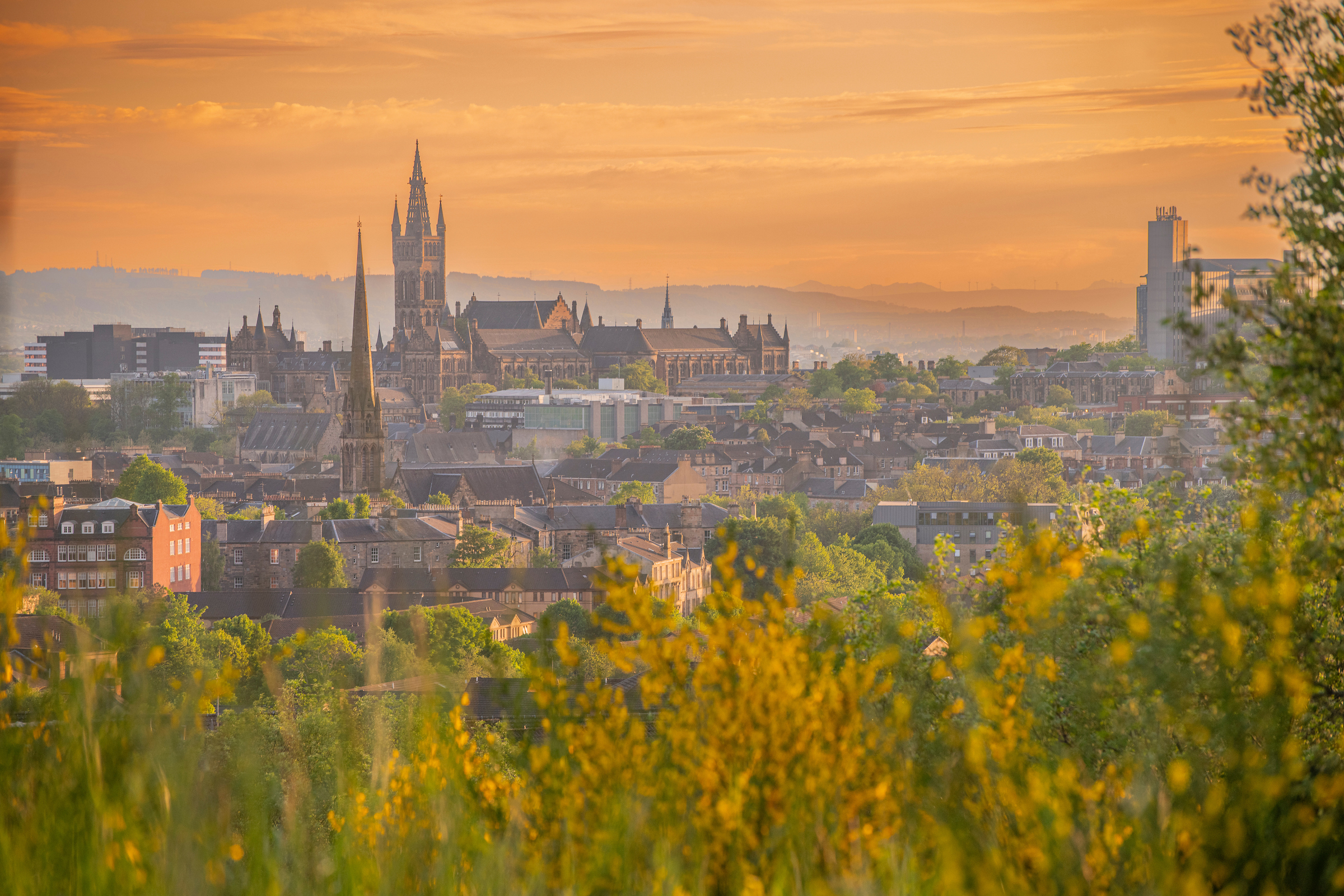
Glasgow stands as a city celebrated for its dynamic spirit and rich cultural heritage. As Scotland’s largest city, Glasgow is well-known for its blend of Victorian architecture with modern creativity, offering visitors an authentic glimpse into both its historic legacy and contemporary energy. From its grand sandstone buildings to its thriving arts and music scene, Glasgow welcomes visitors with warmth, character, and a distinctly Scottish charm.
Glasgow’s West End captivates with leafy streets, elegant townhouses, and attractions such as the Kelvingrove Art Gallery and Museum and the University of Glasgow, whose Gothic spires overlook the River Kelvin. In the city centre, George Square and Buchanan Street bustle with life, offering shopping, dining, and entertainment amidst historic architecture. For those who enjoy the outdoors, the city’s many parks and gardens, including Glasgow Green and the Botanic Gardens, provide peaceful escapes within the urban landscape.
Renowned for its music venues, restaurants, and art scenes, Glasgow embodies a perfect balance of culture and creativity. Its strategic location and direct transport links makes Glasgow a central destination from across the UK and Europe.
Getting there
By Plane
Getting to Glasgow by plane is straightforward. Glasgow is well connected to the UK, Europe, and selected long-haul destinations through Glasgow International Airport (GLA), the city’s main airport. The airport serves a wide range of European hubs and UK cities, with regular flights operated by major international and low-cost airlines.
Glasgow International Airport is located approximately 15 kilometres west of the city centre, ensuring relatively quick and easy transfers. The terminal handles both domestic and international flights, including services from within the Schengen Area and beyond.
In addition, Edinburgh Airport, located about 65 kilometres east of Glasgow, offers an extensive range of international and intercontinental connections and can be a practical alternative depending on flight availability.
Getting to the city from the airport
At Glasgow International Airport, all major car rental companies operate from the arrivals area.
The airport is directly connected to the city centre via the M8 motorway, making car travel straightforward.
Public transport options include:
-
Airport Express bus services, which run frequently between the airport and Glasgow city centre, with a journey time of approximately 15–20 minutes
-
Local bus services connecting the airport with surrounding areas and transport hubs
Taxis are available directly outside the terminal. The journey to the city centre typically takes 15–25 minutes, depending on traffic, with fares varying by time of day.
Ride-hailing services operate via designated pick-up areas, clearly signposted within the airport.
Options from Edinburgh Airport to SEC, Glasgow
- Direct Coach/Bus (Edinburgh to Glasgow)
Scottish Citylink/Express coach services:
- Coaches run directly from Edinburgh Airport to Glasgow city centre (Buchanan Bus Station) at regular intervals (often every ~30 minutes, subject to schedule).
- Estimated journey time: 1.5 – 2 hours (varies with service and traffic).
- Services typically depart from outside the arrivals area; book in advance for best fares and seats.
From Buchanan Bus Station to SEC:
- Taxi: ~10-15 minutes from Buchanan Bus Station to SEC.
- Public transport: Local buses or train options can connect you to the SEC..
- Bus/Tram/Taxi to Edinburgh Haymarket thenTrain to Glasgow
Step A – Edinburgh Airport to Haymarket:
- Airlink 100/shuttle buses/tram run frequently between the airport and Haymarket. The journey takes roughly 20–30 minutes.
- Taxi/ride-hail from the airport to Haymarket is direct and quicker but more expensive (20-30 minutes typical drive).
Step B – Haymarket to Glasgow by train:
- Trains from Edinburgh Haymarket Station to Glasgow Queen Street run very frequently (multiple trains per hour).
- Journey time is around 45 minutes to 1 hour depending on service.
Step C – Glasgow to SEC:
- At Glasgow Queen Street, you can either:
- Take a taxi directly to the SEC (~10-15 minutes),
- Or travel to Exhibition Centre station via bus or train
By Train
Glasgow is one of the UK’s major rail hubs and is served by several central stations, the main ones being Glasgow Central Station and Glasgow Queen Street Station, both located in the city centre.
High-speed and intercity rail services connect Glasgow to major UK cities, including:
-
London in approximately 4.5–5 hours
-
Edinburgh in under 1 hour
-
Manchester in around 3.5–4 hours
International travellers from mainland Europe typically arrive via London or Edinburgh before continuing to Glasgow by train.
The main rail operators and booking platforms include Avanti West Coast, LNER, ScotRail, CrossCountry, and Trainline.
For routes, timetables, and fares across Scotland, consult ScotRail or the national rail information services.
By Car or Bus
By car
Glasgow is well connected by an extensive motorway network, making it easily accessible from across Scotland and the rest of the UK. Key routes include the M8, which links Glasgow with Edinburgh, and the M74, providing connections to southern Scotland and England.
Glasgow operates Low Emission Zones (LEZ) in the city centre. Vehicles that do not meet the required emissions standards may be subject to penalties. Visitors travelling by car are advised to check compliance requirements in advance, particularly when hiring vehicles or driving from outside Scotland.
Up-to-date traffic information and journey planning tools are available via Traffic Scotland and local transport authority websites.
By bus
Glasgow has excellent long-distance coach connections through Buchanan Bus Station, located in the city centre. It serves as a major hub for national and international coach services, offering direct routes to cities across Scotland, England, and beyond.
Operators such as FlixBus, National Express, and Megabus provide frequent and cost-effective services.
More information
Tourist information and maps to download
Comprehensive visitor information, including city maps, transport guides, and planning resources, is available from Visit Glasgow. These materials are designed to help visitors plan their stay and navigate the city efficiently. https://www.visitglasgow.com/
Getting around Glasgow
Despite being one of Scotland’s largest cities, Glasgow is compact and easy to navigate. Many of the city’s main cultural attractions, shopping areas, and dining districts are located in or close to the city centre and the West End. Glasgow’s public transport network – including buses, suburban rail services, and the underground subway – is efficient, well signposted, and straightforward to use for visitors.
Subway
Trains run frequently with the city’s light‑metro system, operated by Strathclyde Partnership for Transport (SPT), featuring 15 stations in a loop around the city centre and West End.
Bus
The bus network in Glasgow is extensive, with more than 80 routes operated by First Bus and other providers covering the city and suburbs. Day‑tickets provide unlimited travel within the selected area. The Glasgow Airport Express 500 bus links Glasgow Airport to the city centre in around 15 minutes.
Tickets & Payment
Tickets for subway and buses are available via the SPT portal or at the station. Single journey fares start from around £1.65 on the Subway. SPT smart‑card and contactless payment options are available. Find out more information here: https://www.spt.co.uk/travel-with-spt/subway/?utm_
Bike
Glasgow offers a growing number of cycle lanes and active‑travel paths. The city has introduced a 20 mph speed‑limit zone on many streets to encourage walking and cycling.
Visa Information
The United Kingdom, of which Scotland is a part, is a welcoming destination for travellers. As the UK is not a member of the European Union or the Schengen Area, entry requirements differ from those of mainland European countries.
You will not need a visa to enter the United Kingdom if you are a citizen of the European Union or European Economic Area, provided your visit is for tourism, business, or short-term study lasting no longer than 6 months. However, as of 2025, all visa-exempt travellers will be required to obtain an Electronic Travel Authorisation (ETA) before departure. The ETA is not a visa, but a simple online pre-travel requirement that allows multiple entries during its validity period. Applicants will need a valid passport, an email address to receive the authorisation, and a debit or credit card to pay the small processing fee. Find out more here: https://www.gov.uk/eta
For US citizens planning a visit to Glasgow, entry is visa-free for up to 6 months, whether for tourism or business purposes, but an ETA will also be required before departure. Ensure your passport is valid for the duration of your stay. You may be asked to show a return or onward ticket and proof of sufficient funds for your visit.
Australian citizens can travel to the United Kingdom without a visa for visits of up to 6 months, but will likewise be required to obtain an ETA before departure.
If you’re from a country not previously mentioned, you may need to apply for a Standard Visitor Visa to enter the UK. We recommend checking the UK Government website for up-to-date information on visa requirements and how to apply: https://www.gov.uk/check-uk-visa
Letter of Invitation and Visa
To receive an Invitation Letter for your Visa application or other purposes, the meeting registration must be completed and the conference fee must be fully paid. Online registrants will be prompted to create a Letter of Invitation (only available to fully paid registrants). Registrants using paper form can request a Letter of Invitation from secretary@efic.org.
It is very important that registrants needing visas apply early enough to complete the visa application process. We recommend that travelers apply as soon as they possibly can after affirming their ability to attend the conference. It is the responsibility of the participant to obtain a visa if required.
The Letter of Invitation does not financially obligate the Congress organiser or any of their related partners in any way. All expenses incurred in relation to the Congress are the sole responsibility of the attendee.