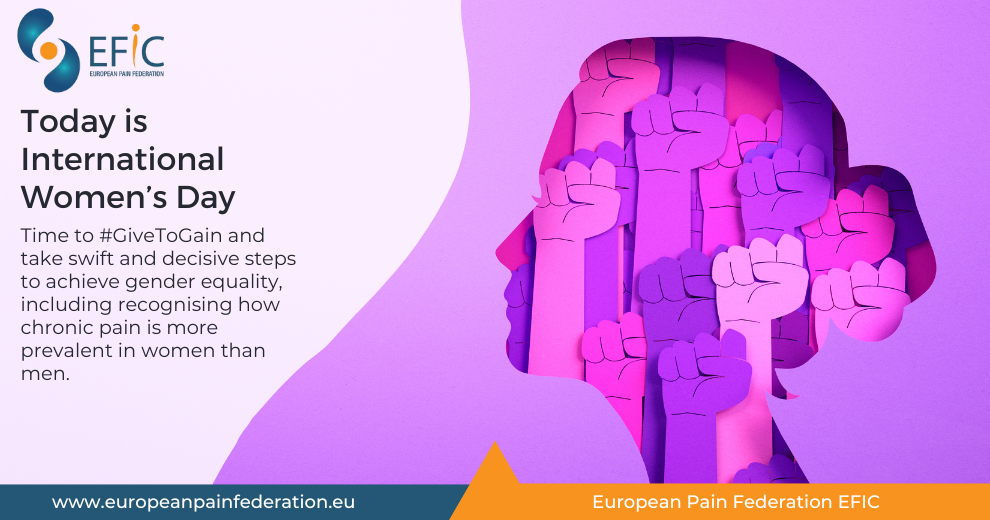
In pain research and care, the Give To Gain message is especially relevant. Evidence consistently shows that women experience chronic pain more frequently than men, and are at greater risk of conditions such as migraine, osteoarthritis, low back pain, widespread pain, irritable bowel syndrome and painful diabetic neuropathy. Women also make greater use of healthcare services for pain-related problems.
The reasons for these differences are complex and multifactorial. They include genetic influences, molecular and cellular mechanisms – such as the effects of sex hormones on neuronal function – as well as differences in pain-related neural circuits. Psychosocial factors also play a significant role, including gender stereotypes, socially learned gender roles, and beliefs and expectations about pain.
An often-overlooked issue is how pain is measured and assessed across genders. Differences in assessment methods can influence how people describe their pain and how clinicians interpret it. At the same time, further research is needed to better understand the impact of sex- and gender-related bias in scientific studies and clinical practice, and to develop strategies to reduce these biases.
There is also a critical lack of research on pain among people who identify as non-binary, transgender and gender-diverse, highlighting an important area where we must give greater attention, visibility and resources.
On International Women’s Day 2026, under the theme #GiveToGain, we are encouraged to actively contribute to more equitable pain research and care. By giving our commitment to inclusive research, better assessment practices, knowledge sharing and advocacy, we can help close persistent gaps and improve outcomes for women and gender-diverse people living with chronic pain.
Upcoming Webinar
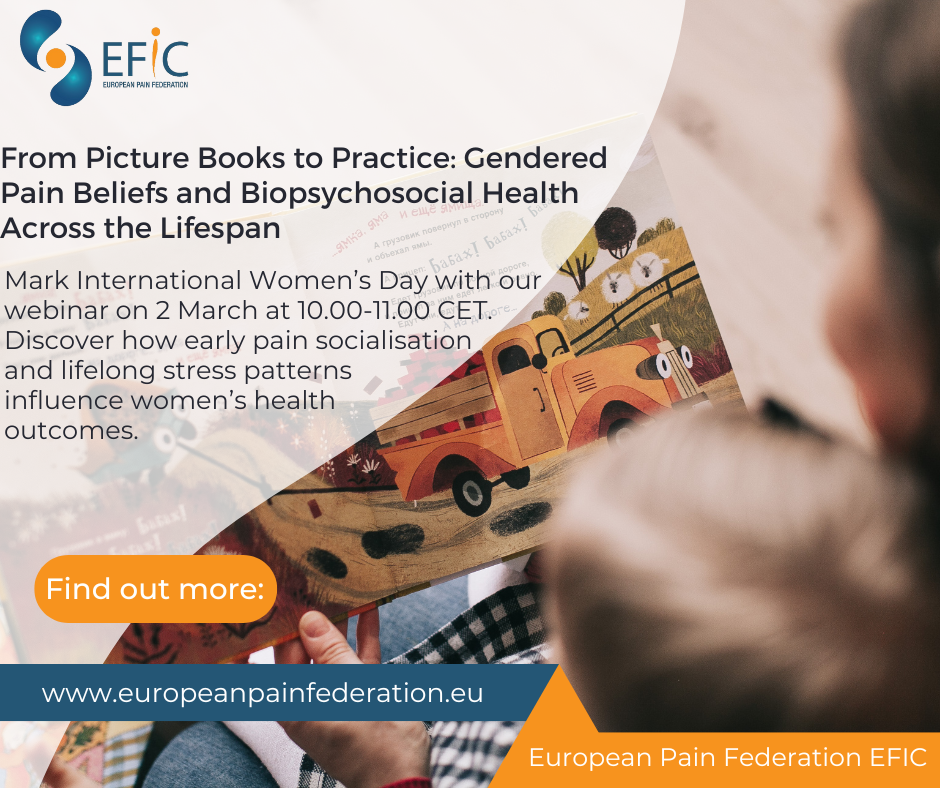
As part of International Women’s Day, EFIC will host the webinar From Picture Books to Practice: Gendered Pain Beliefs and Biopsychosocial Health Across the Lifespan on 2 March 2026, 10:00 (CET) in Brussels.
The session will explore how gender stereotypes shape pain beliefs from early childhood to adulthood, combining evidence from cultural research on children’s picture books with epidemiological data on pain, stress and mental well-being, and highlighting important gender-specific psychosocial patterns, particularly in women.
The two expert presentations will be followed by a joint Q&A on what these findings mean for research, clinical practice and more gender-responsive pain care.
Register here: https://us06web.zoom.us/webinar/register/WN_uJM6LuERRCSp3hRthp4Uyg#/