Together to relieve Chronic Pain
The first Global Day Against Pain was organised in 2004 by the International Association on the Study of Pain (IASP) and the European Federation of the IASP Chapters (EFIC). The World Health Organization (WHO) co-sponsored the campaign, which originated from the collective efforts of pain management organisations and advocacy groups seeking to address the widespread impact of pain on individuals and societies globally. Over the years, it has evolved into a broader awareness campaign, marked by educational activities, public campaigns, and collaborative initiatives, such as IASP’s Global Year Campaign, to improve the lives of those affected by pain.
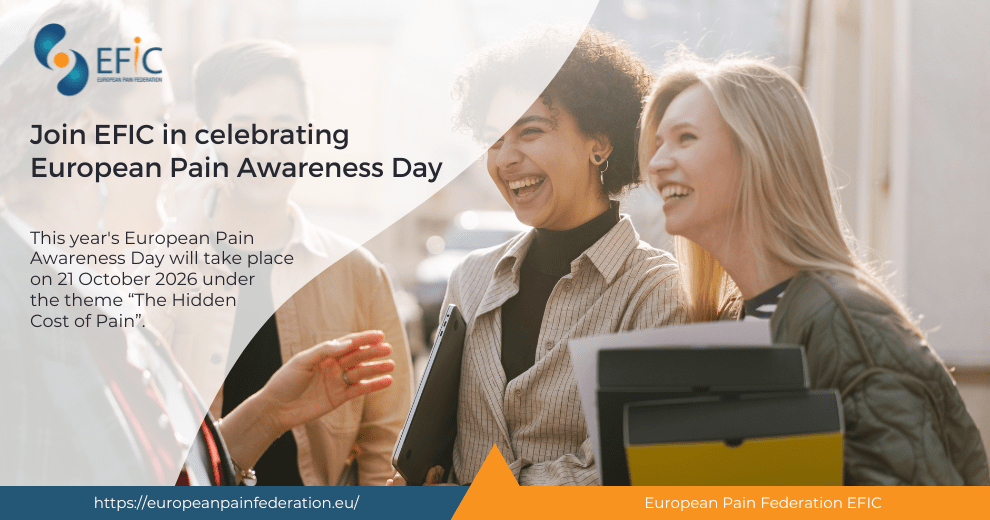
Starting in 2024, the European Pain Federation EFIC established a ‘European Pain Awareness Day’ dedicated to increasing understanding and awareness of chronic pain, a condition affecting millions worldwide. Celebrated annually on the third Wednesday of October, the European Pain Awareness Day brings together healthcare professionals, researchers, policymakers, patients, and the general public through a collaborative campaign. This day emphasises the significant impact chronic pain has on patients’ lives, often leading to physical, emotional, and economic burdens. The aim is to foster a supportive environment where those affected by chronic pain can find the resources, understanding, and care they need. Through these efforts, the day aims to reduce the stigma associated with chronic pain, improve patient outcomes, and advocate for policy changes that prioritise effective pain management.
Theme for 2026: The Hidden Cost of Pain
EFIC has chosen “The Hidden Cost of Pain” as the theme for this year’s European Pain Awareness Day to highlight the often-overlooked economic and societal burden of pain. With around 150 million people living with chronic pain across Europe, its direct and indirect costs are estimated to account for between 3% and 10% of GDP annually in EU Member States.
Furthermore, this theme reflects one of the main priorities of the Societal Impact of Pain (SIP) Platform in 2026. Through its latest Position Paper on Employment and the Economic Considerations of Pain, SIP calls for coordinated action across health, employment, and social policy to improve pain management while supporting people living with chronic pain to remain in, or return to, work.
As part of this initiative, SIP will host its annual policy event, “Chronic Pain, Employment and Economic Competitiveness: The Hidden Cost of Pain“, at the European Parliament on 10 November 2026. Bringing together policymakers, clinicians, researchers, employers, and patient representatives, the event will examine how addressing chronic pain can strengthen both public health and Europe’s economic resilience, while advancing policy solutions that support employment, productivity, and quality of life.
The epidemic of pain
- Pain is a major global health challenge, causing significant disability, reducing quality of life, and placing a heavy burden on healthcare systems and economies. Despite its widespread impact, pain remains under-recognised and underfunded in research. To help address this, the European Pain Federation EFIC has developed a Pain Research Strategy for Europe, aiming to highlight urgent research priorities and guide investment. Through this initiative, EFIC seeks to drive progress in pain understanding and management, ultimately easing the societal and personal toll of pain.
- In Europe alone, almost 20% of the adult population reports having moderate or severe chronic pain. This means there are 150 million people in Europe experiencing chronic pain.
- Pain is the most common reason people seek healthcare and the leading cause of disability and reduced quality of life.
Available resources
Explore EFIC’s resources on this year’s theme below, available in English.
With the support of our National Chapters, we have translated the policy brief into the following languages:
- Armenian
- Croatian
- German
- Hungarian
- Polish
- Portuguese
- Russian
- Slovak
- Spanish
- Swedish
- Turkish
- Ukrainian
For additional language versions, please reach out to secretary@efic.org.
Feel free to use these to promote this year’s theme, spread awareness, and draw further attention to this important campaign.
Easy to understand pain explainers and downloads
The European Pain Federation EFIC offers a range of resources to increase public awareness of pain and pain management. Explore our explainers, visuals, and infographics, designed to help clinicians provide patients with accessible introductory information about pain:
SIP Access to Treatment Infographics
Join the EFIC Academy
The EFIC Academy Education Platform provides access to the highest quality online pain education material. It includes tailored material to the four EFIC curricula, developed by leading European educators specifically with an online learning environment in mind.
Among the resources available, the interactive Clinical Case videos offer valuable insights into chronic pain and state-of-the-art therapeutic approaches, helping to enhance clinical skills in day-to-day practice. To find out more and become a member, please click here.
EFIC Advocacy Projects
The European Pain Federation EFIC campaigns to improve government policies affecting pain and raise awareness of pain’s importance, including its management, treatment, and prevention, amongst patients and the general public. Find out more about current projects:
“Plain Talking”: EFIC Campaign on Health Literacy
“On the Move”: EFIC Campaign on Physical Activity
Other Events
The 15th Congress of the European Pain Federation EFIC will take place in Glasgow, Scotland, from the 21st – 23rd April 2027. Building on the success of #EFIC2025 in Lyon, #EFIC2027 will bring together leading experts to explore the latest developments in pain science, education, and clinical practice. Stay informed and discover more about EFIC’s upcoming Congress: #EFIC2027.
EFIC Research Projects
Between 2021 and 2024, the European Pain Federation EFIC developed a ‘pain research strategy’ in order to provide focus for future funding topics, reduce ‘research waste’, improve the effectiveness of pain research and therapy, and promote the uptake of research evidence. The pain research strategy should provide leadership for the European pain research community and establish a focal point for major funders of pain research such as the European Commission. The full text can be found here: A pain research strategy for Europe: A European survey and position paper of the European Pain Federation EFIC
EFIC has also launched its Pain Scientist Network, our internal listing of pain scientists, organised by their research expertise and activity fields. Pain scientists who join the network will have the opportunity to connect with other researchers in their field and multiply their collaborations.
Results of the EFIC Education Study were published in the European Journal of Pain in May 2025. It examined the current state of pain education across Europe, highlighting gaps in training and offering recommendations for improving curricula in medical and healthcare programmes.